|
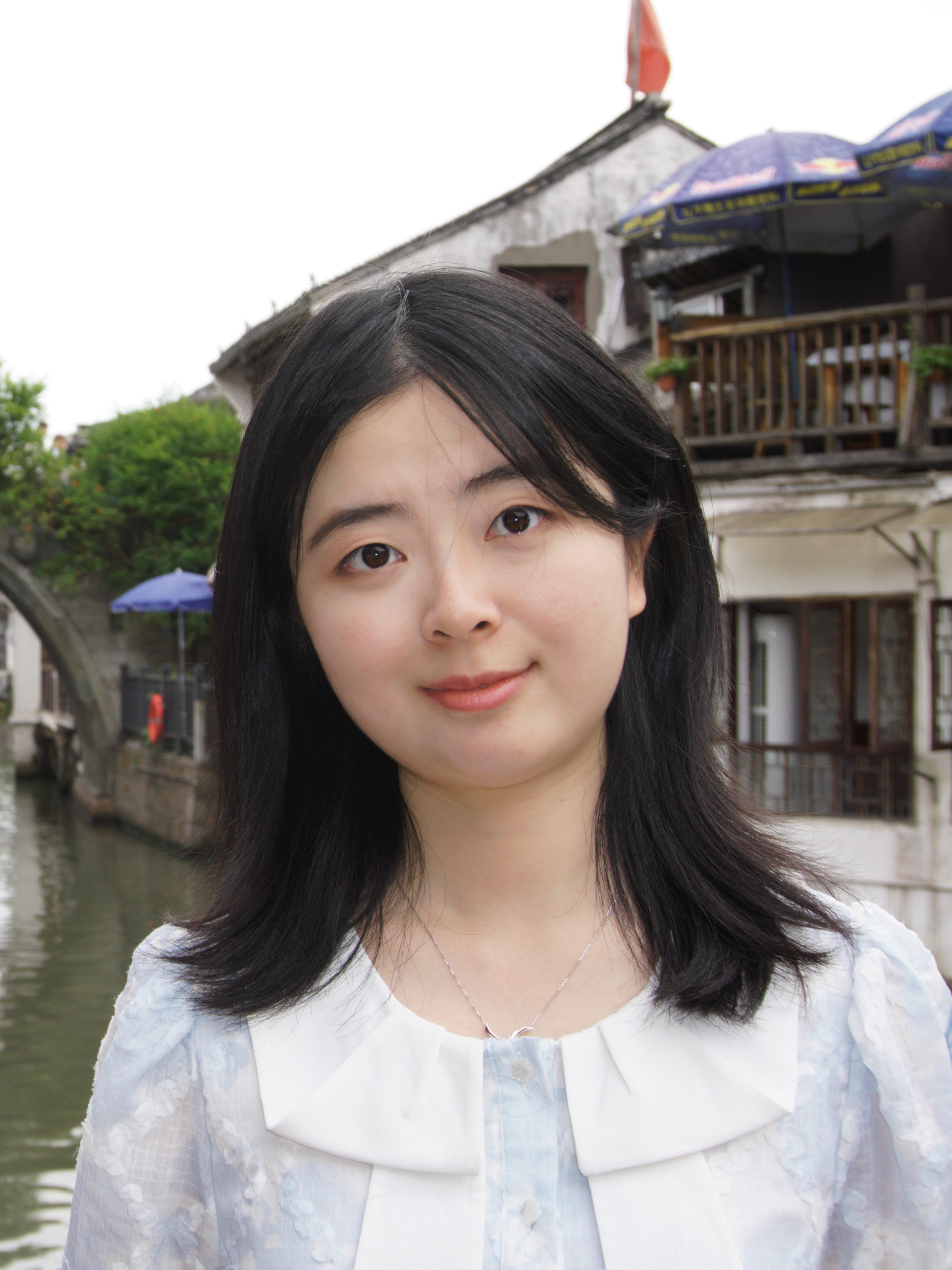
Ruiyi Fang (方睿怡) Hi! This is Ruiyi (Raelyn)! I am a first-year Ph.D student at Yamakawa Lab in UTokyo, advised by Prof. Yawakama, majoring in Mechanical Engineering. Previously, I received my master's degree in Artificial Intelligence from Central South University, fortunately advised by Prof. Kai Wang. I received B.E. from Chang'an University. I am broadly interested in the intersection of AI and robotics, such as robot learning and Vision-Language-Action(VLA) models. Specifically, my current research mainly focuses on imitation learning based robot manipulation, especially in few-shot scenarios. I enjoy thinking about how to enable robots to acquire complex skills with data-efficiency, enhancing autonomy and adaptability in real-world applications. Please feel free to contact me with email! ~ Email / CV / Github / Google Scholar ~ |
|
News |
Oct'25 |
Starting my PhD journey at UTokyo! |
Feb'25 |
One paper <Multi-step Difference-driven Domain Adversarial Network for Few-sample Fault Detection in Dynamic Industrial Systems> got accepted in EAAI. |
Research |
|
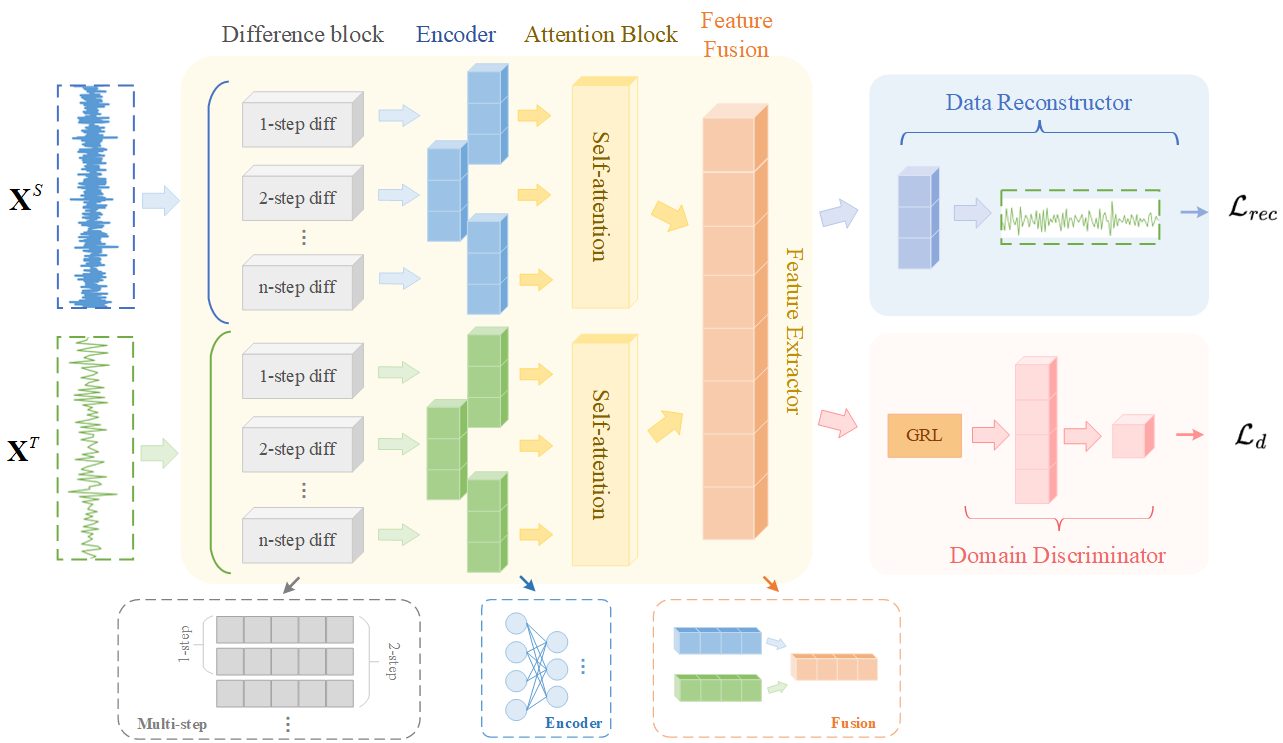
Multi-step Difference-driven Domain Adversarial Network for Few-sample Fault Detection in Dynamic Industrial Systems
Ruiyi Fang, Kai Wang*, Xiaofeng Yuan, Zeyu Yang, Yalin Wang, Chunhua Yang. Engineering Applications of Artificial Intelligence (EAAI), 2025 [paper] In this study, we introduce a dynamic domain adversarial network (DDAN) for dynamic few-sample fault detection in industry. To tackle the dynamic characteristic in industrial data, a special multi-step difference module incorporating the self-attention mechanism is designed. Moreover, considering the few-sample problem (or cold-start problem), the DDAN is trained in an adversarial framework to transfer the domain-invariant features. |
|
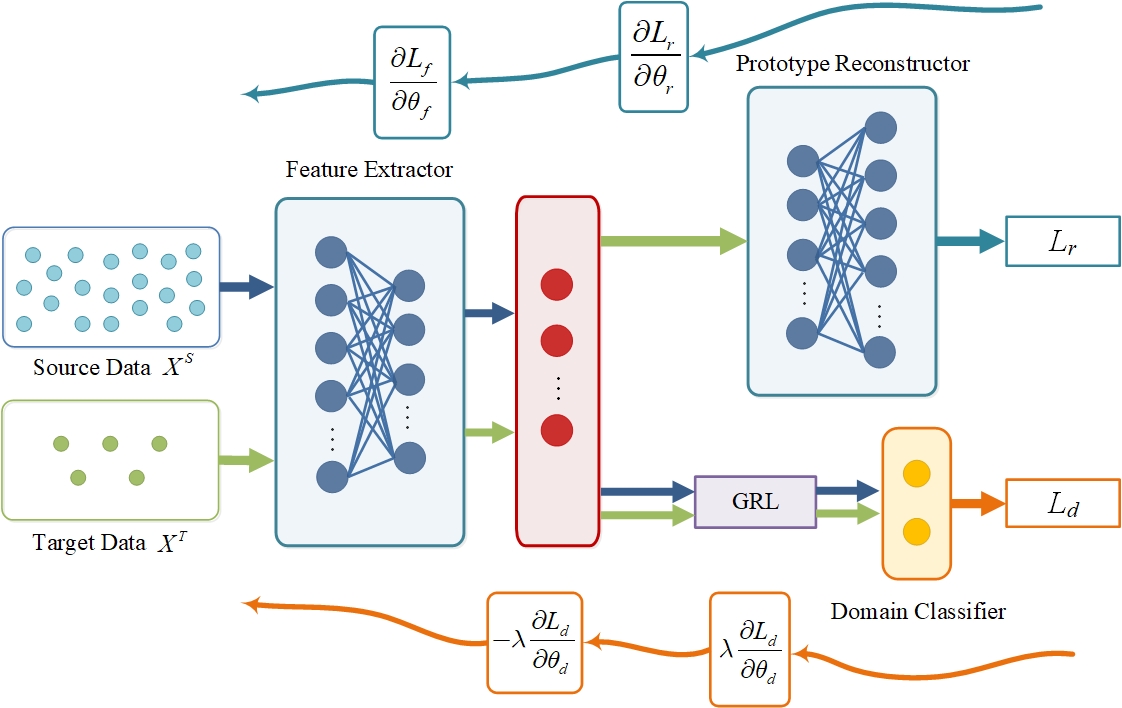
Unsupervised Domain Adversarial Network for Few-sample Fault Detection in Industrial Processes
Ruiyi Fang, Kai Wang*, Jing Li, Xiaofeng Yuan, Yalin Wang. Advanced Engineering Informatics (AEI), 2024 [paper] In this work, we introduce an adversarial-based unsupervised network for fault detection in few-sample scenarios. Due to the significant disparity in data quantity between the target domain and the source domain, the adversarial training process inevitably encounters an imbalance problem. To address this issue, we propose a domain imbalance aware margin (DIAM) loss to rebalance the domain margin between the two domains. |
|
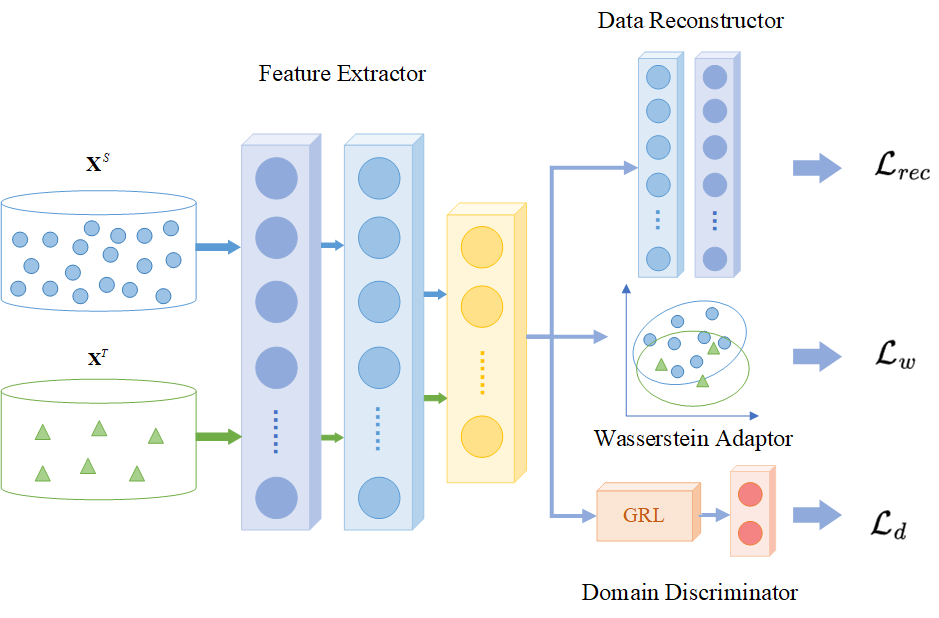
Wasserstein Distance Based Domain Adversarial Autoencoder for Industrial Few-sample Fault Detection
Ruiyi Fang, Kai Wang*, Xiaofeng Yuan, Yalin Wang, Chunhua Yang. Asian Control Conference (ASCC), Jul. 2024 (Oral) [paper] We propose a method called WDAA, which utilizes an adversarial framework to transfer knowledge from a data-rich source domain to a data-poor target domain. To further enhance the domain adaptation performance, we develop a Wasserstein adaptor. The model was validated using data from an industrial process, the Continuous Stirred-Tank Reactor (CSTR). |
Education |

|
Oct '25 - Awards:
|

|
Sep '22 - Jun '25 Awards:
|

|
Sep '18 - Jun '22 Awards:
|
|
This template is a modification to Jon Barron's website. Find the source code to my version here. Feel free to clone it for your own use while attributing the original author Jon Barron. |